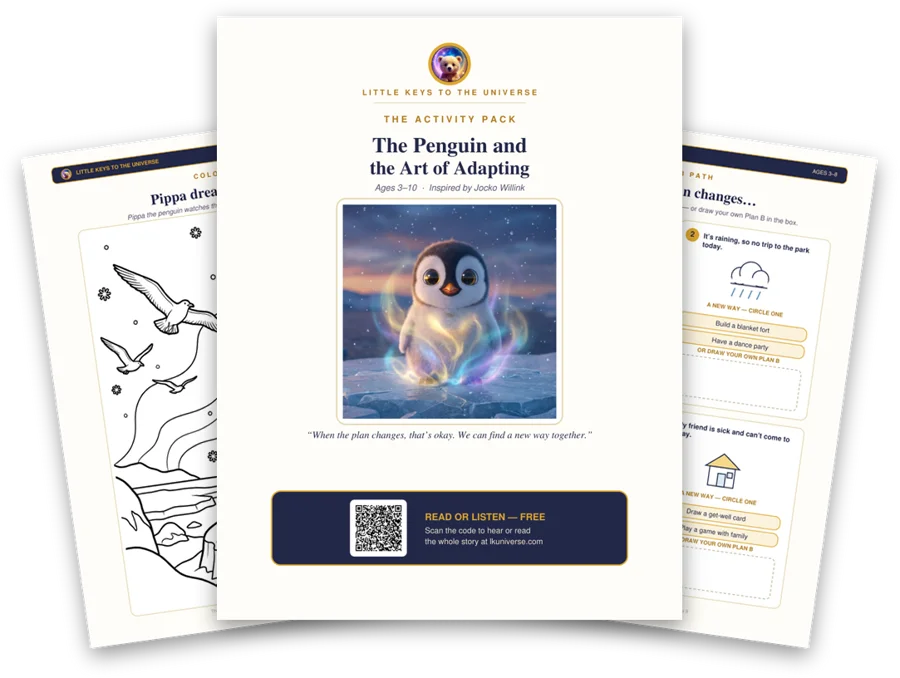
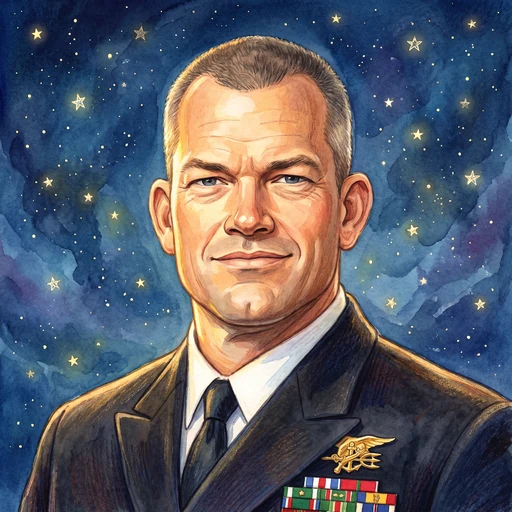
As we grow, we will face times when things don’t go as planned. Maybe we try something, and it just doesn’t work. Do we give up, or do we find another way? This story is inspired by Jocko Willink, a leader who teaches that the strongest people aren’t those who never struggle—but those who adjust, adapt, and overcome. Instead of seeing failure, they see new opportunities.
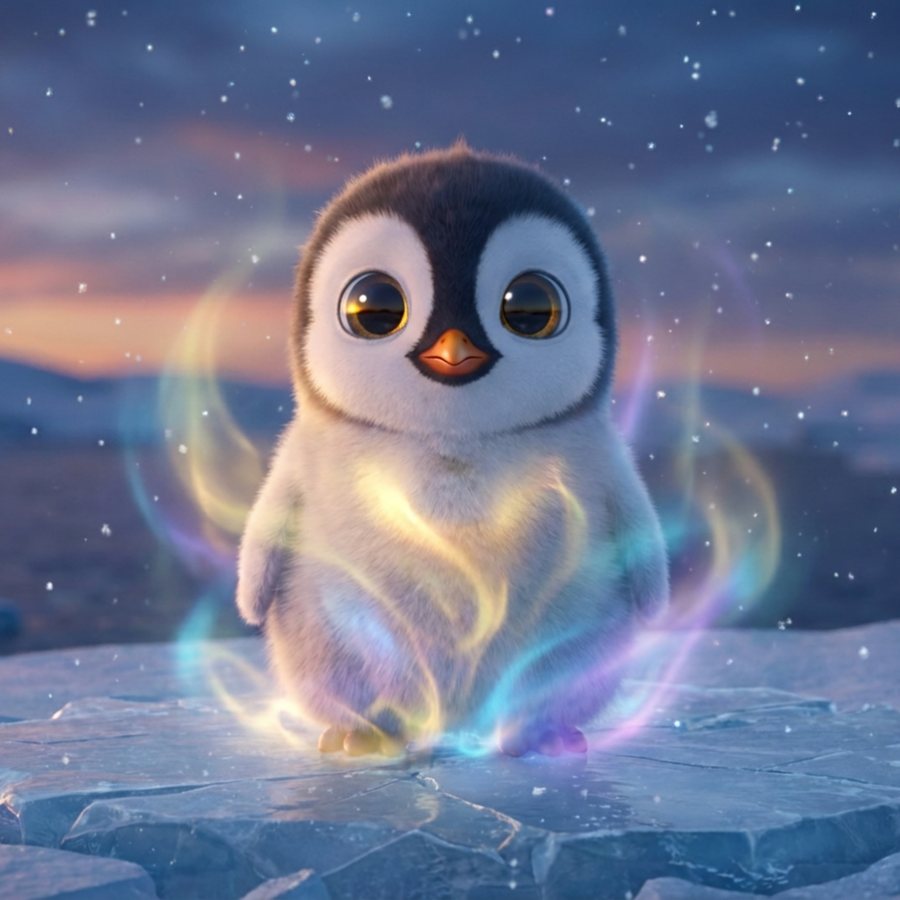
In the heart of Glacier Bay, where the wind howled and waves crashed against frozen cliffs, lived a little penguin named Pippa. While the other penguins loved waddling and sliding across the ice, Pippa had a dream—she wanted to fly.
Every day, she watched the seagulls soar above the ocean, their wings stretched wide as they glided effortlessly through the sky. “That should be me,” she thought. “If they can fly, why can’t I?”
One morning, Pippa made up her mind. “I don’t care what anyone says—I will fly!” She climbed to the highest ledge of ice, flapped her wings as hard as she could, and… SPLAT! She tumbled into a soft pile of snow.
The other penguins giggled. “Pippa, we’re penguins! We don’t fly!”
But Pippa wasn’t ready to give up. The next day, she tried running faster. Then, she tried jumping higher. She even asked the wind to help lift her up. But no matter how hard she flapped, no matter how high she jumped, nothing worked.
She watched the seagulls glide effortlessly above the water, their wings catching the breeze, their movements smooth and free. Pippa tried again. And again. And again. Each time, she fell.
Frustrated, she stomped her flippers. “Why can’t I do it? No matter how hard I try, I just can’t fly.”
A deep voice rumbled nearby, steady as the waves. It was Mateus, the wise elder penguin, whose feathers were streaked with silver from years of adventure. He had been watching Pippa all along.
“Tell me, little one… what do you love about flying?”
Pippa thought for a moment. “I want to feel free. I want to go fast. I want to glide through the world like the seagulls do.”
Mateus smiled. “Then maybe you’re asking the wrong question. Instead of ‘Why can’t I fly?’ ask, ‘How else can I do it?’”
Pippa blinked. “What do you mean?”
Mateus turned toward the ocean. “The sky is not your home, little one. But the water… the water is where you were meant to fly.”
Pippa hesitated. The water? She had never thought about that before. The ocean was wild, deep, and endless. But… maybe there was something she hadn’t seen yet.
Mateus chuckled. “Go on. The waves are waiting.”
Pippa took a deep breath. She waddled to the edge of the ice, the wind whipping around her. Below, the ocean stretched farther than she could see, dark and shimmering in the morning light.
For a moment, she felt afraid. "What if I can’t?"
Then, she remembered Mateus’s words. "Instead of asking why you can’t… ask how else you can."
With one last breath, she jumped.
WHOOSH!
The moment she hit the water, everything changed.
She kicked her feet, and suddenly, she wasn’t just moving—she was gliding. She flapped her wings, and instead of struggling, she soared through the waves like an arrow. The water wrapped around her like the sky around the seagulls. She twisted, turned, and sped through the ocean faster than she had ever moved before. She wasn’t flying in the air—she was flying through the sea.
Pippa shot back up to the surface, gasping and laughing.
Mateus stood on the ice, watching her with knowing eyes. “See? You were never meant to fly like a seagull. You were meant to fly like a penguin.”
And so, Pippa finally understood. She hadn’t failed—she had simply been looking in the wrong place. She still loved watching the birds in the sky, but she knew her own gift was just as special. Because the ocean was her sky.
She raced through the waves, weaving between the ice, faster than any penguin had ever swum before. And for the first time, she felt exactly what she had been searching for—freedom.
Not every challenge is about pushing harder. Sometimes, the best way forward is to change direction. Instead of fighting what isn’t meant for us, we can discover what is. When things don’t go as planned, don’t give up—adapt. Find another way. The right path isn’t always the one we expect, but if we look closely, it might just be the one we were meant for all along.