A cancelled plan can wreck a child's whole day. Here are two small words that turn 'everything's ruined' into 'let's find the new path.'
The park is closed. The friend cancelled. The favorite cup is in the dishwasher. For many kids, a broken plan doesn’t feel like an inconvenience — it feels like a catastrophe, and the meltdown that follows is real. The good news is that flexibility is a skill, not a fixed trait, and there’s a small, almost silly tool that helps a child build it: two words to reach for when the plan falls apart.
Why changed plans hit kids so hard
A young child’s world runs on expectation. They build a picture of how the next hour will go, and that picture feels solid — almost promised. When reality doesn’t match it, the gap between “what I expected” and “what’s happening” can feel genuinely distressing, not just disappointing. This is developmentally normal: the ability to smoothly shift from Plan A to Plan B (what psychologists call cognitive flexibility) is still under construction in early childhood.
The reason meltdowns over changed plans are so common isn’t that kids are being dramatic. It’s that they often have no response ready for the moment the plan breaks — so all that’s left is the distress. Give a child a simple, repeatable response, and everything changes. Something as small as a two-word habit — “Good. Adapt.” — gives them a script to reach for, a tiny pivot from “everything’s ruined” toward “okay, what does this open up instead?” It won’t erase the disappointment, but it hands them a doorway out of it.
The aim isn’t a child who never minds when plans change — that’s not realistic, or even desirable. It’s a child who, when the plan breaks, has somewhere to go besides the floor.
10 ways to build flexibility
- Give them a tiny script. “When the plan breaks, we say ‘okay, new plan.’” A ready response beats raw distress.
- Name the feeling first. “You were really looking forward to that” has to come before problem-solving.
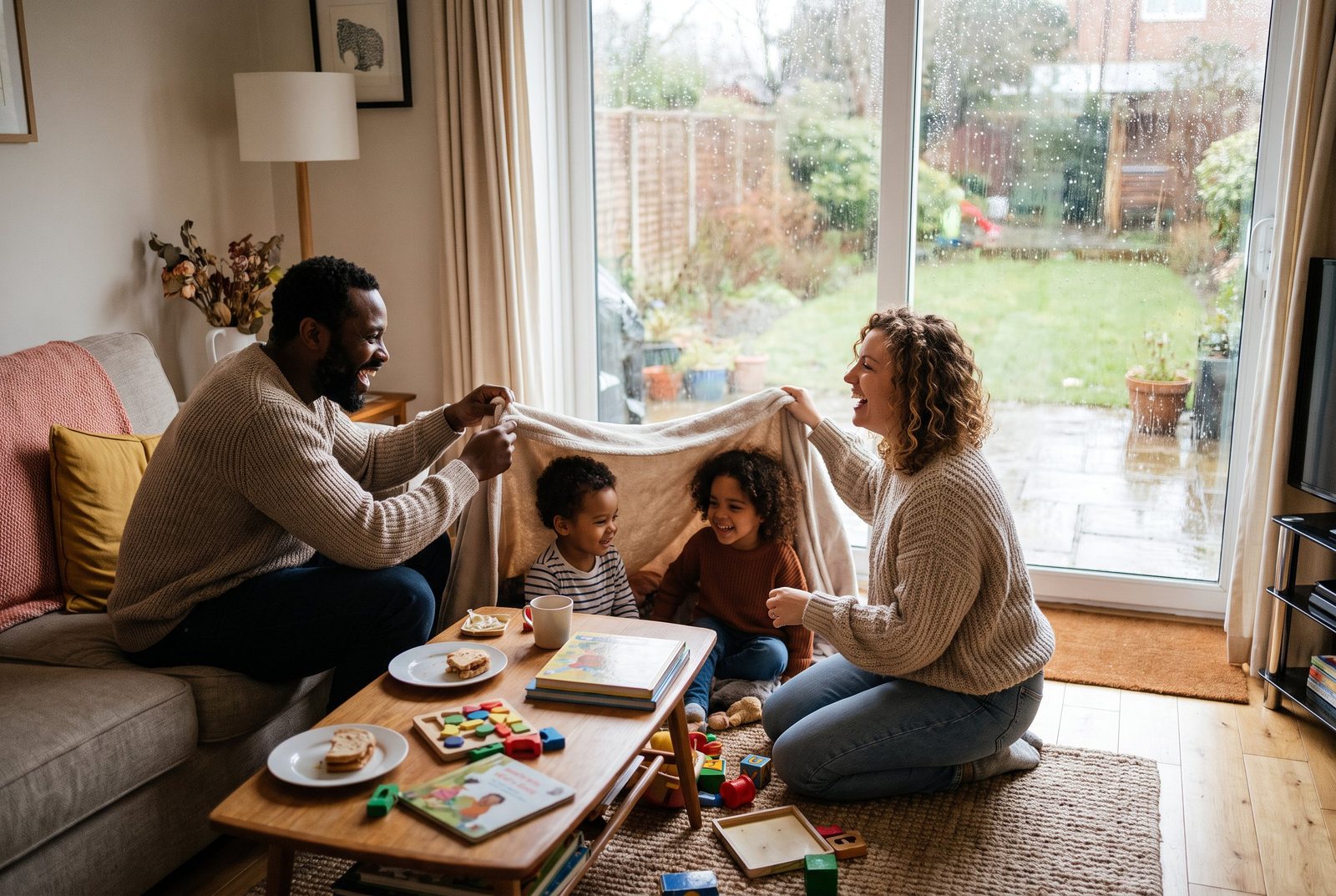
- Model your own pivots. “Rained out — okay, indoor fort day it is.”
- Look for what it opens. “The park’s closed and now we have time for the thing you wanted.”
- Warn before changes when you can. A heads-up shrinks the gap between expectation and reality.
- Practice small flips low-stakes. Change tiny plans on purpose sometimes, so pivoting gets familiar.
- Don’t over-promise. “We’ll see” protects better than a plan that might fall through.
- Celebrate the recovery. “You were disappointed and you found a new plan — that’s flexible.”
- Keep your own calm. Your steadiness when plans break teaches more than any words.
- Let a story carry it. A character who says “Good. Adapt.” and finds a better path shows it best.
Tonight’s story hands them the pivot
The Penguin and the Art of Adapting follows a penguin whose perfect plan falls apart — until she learns two small words that turn each broken plan into a new path. It’s inspired by Jocko Willink and his “Good” philosophy for meeting setbacks.
Tonight’s tiny plan
- Play the story before lights-out.
- Ask: “Did anything not go as planned today? Let’s practice: say ‘Good’ — what new path could it open?”
- Tomorrow, when a small plan breaks, model the pivot out loud.
Plans will keep falling through — that never stops. The gift is a child who, when it happens, has a door to walk through instead of a wall to melt down against.