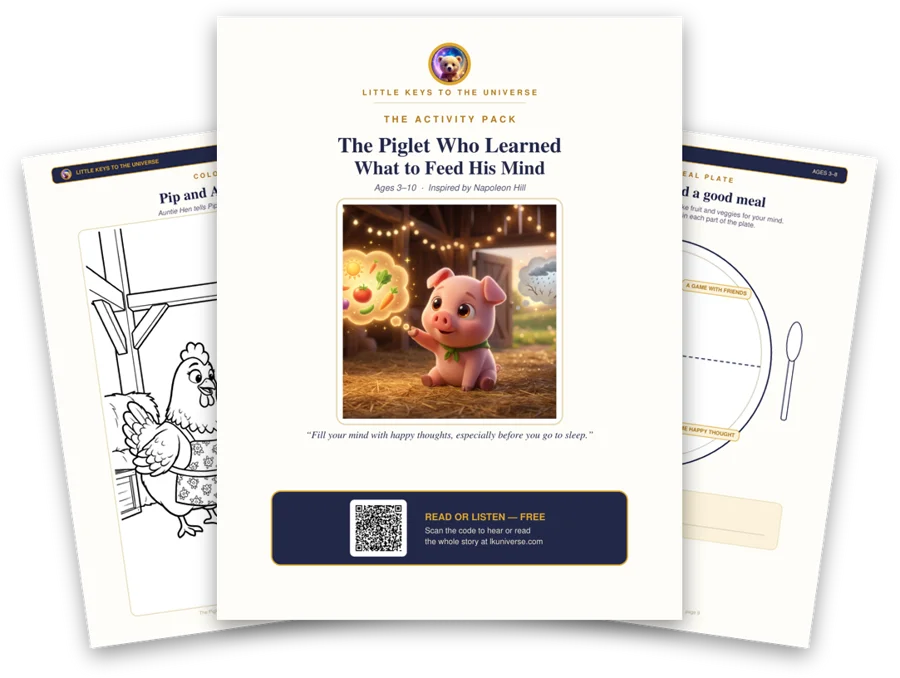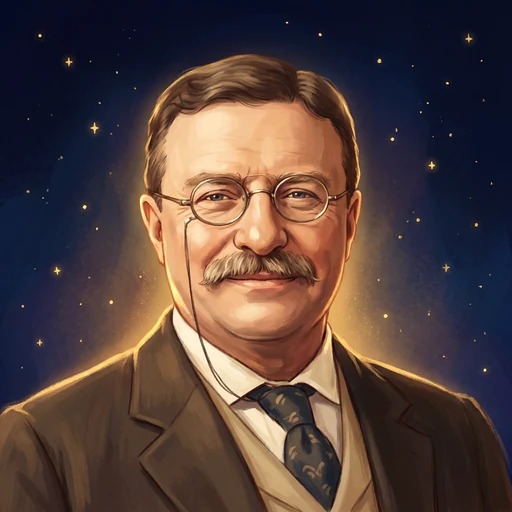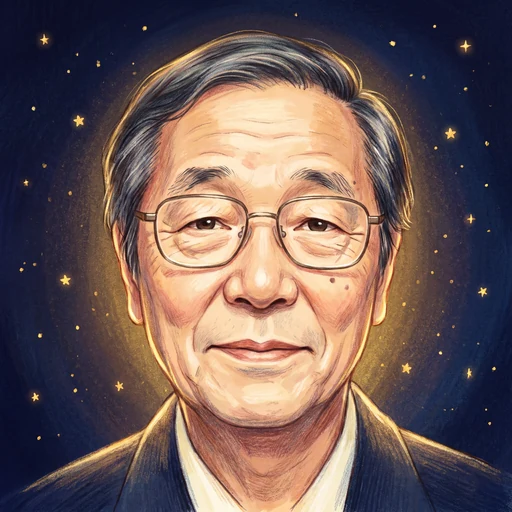
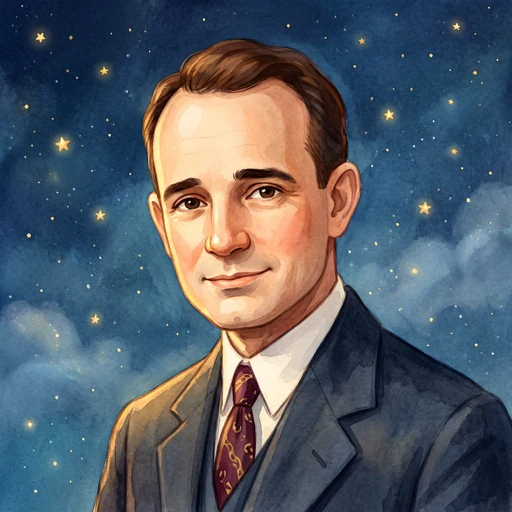
Napoleon Hill, a wise teacher, explained that our thoughts are like meals. If we fill our minds with junk—complaints, anger, and nonsense—that’s what grows inside us. But if we feed our minds good things—hope, kindness, and ideas—we grow strong and happy.
Let’s turn the key… and step inside.
Pip the Piglet loved snacks.
Cookies, candy, chips, chocolate—if it crunched or crumbled, Pip gobbled it up.
“Oink, oink, yum-yum!” he cheered, stuffing his cheeks until crumbs flew everywhere.
But Pip also loved screens.
Every afternoon, he plopped on the couch with his tablet.
He watched The Grumpy Goat Show, where everyone shouted “BORING!”
He binged Worm Wiggle Videos, where worms just wriggled around forever.
He clicked Pranks Gone Wrong, which always ended with someone yelling, “Not fair!”
At first, Pip snorted and giggled. But after hours of watching and munching, he waddled around groaning:
“Oink… oink… uuurrgh…”
His tummy felt heavy. His head buzzed with “BORING!” and “Not fair!”
Even his curly tail drooped.
Still, Pip muttered, “It’s just what I like!”
One day, Pip’s Auntie Hen found him slumped on the couch, cookie crumbs all over his snout, eyes glued to yet another worm video.
“Pip,” she clucked, “what are you feeding yourself?”
Pip grinned weakly. “Cookies… and cartoons!”
Auntie Hen tilted her head. “And how do you feel?”
Pip groaned. “Oink-oink-uuurrgh.”
“Exactly,” said Auntie Hen. “Too much candy makes your tummy ache. And too much junk for your mind makes you feel cranky, tired, and stuck.”
Pip blinked. “Wait… my mind eats too?”
“Of course,” Auntie Hen nodded. “Your mind eats whatever you watch, listen to, or think about. Junk in—junk out.”
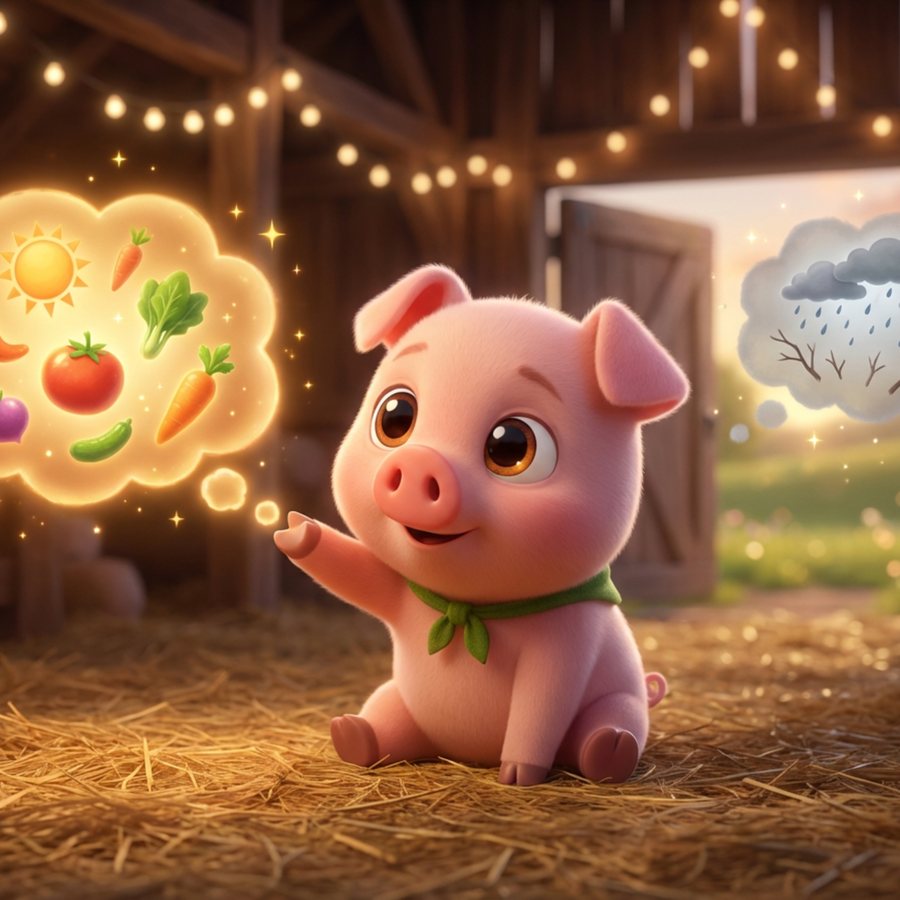
Pip imagined it.
A “BORING!” donut bouncing around in his head.
A “NOT FAIR!” soda fizzing in his brain.
A bucket of “I CAN’T DO IT” ice cream melting down his ears.
“Ewwww!” Pip squealed. “That’s gross!”
Auntie Hen smiled. “But just like food, you can choose better. A story that makes you laugh kindly. A thought like I can try. A game with friends. That’s like feeding your mind fruit and veggies—things that make you strong.”
Pip decided to experiment.
He shut off the Worm Wiggle Videos (even though they wiggled temptingly).
He put the cookie jar back on the shelf.
Instead, he thought, I can play.
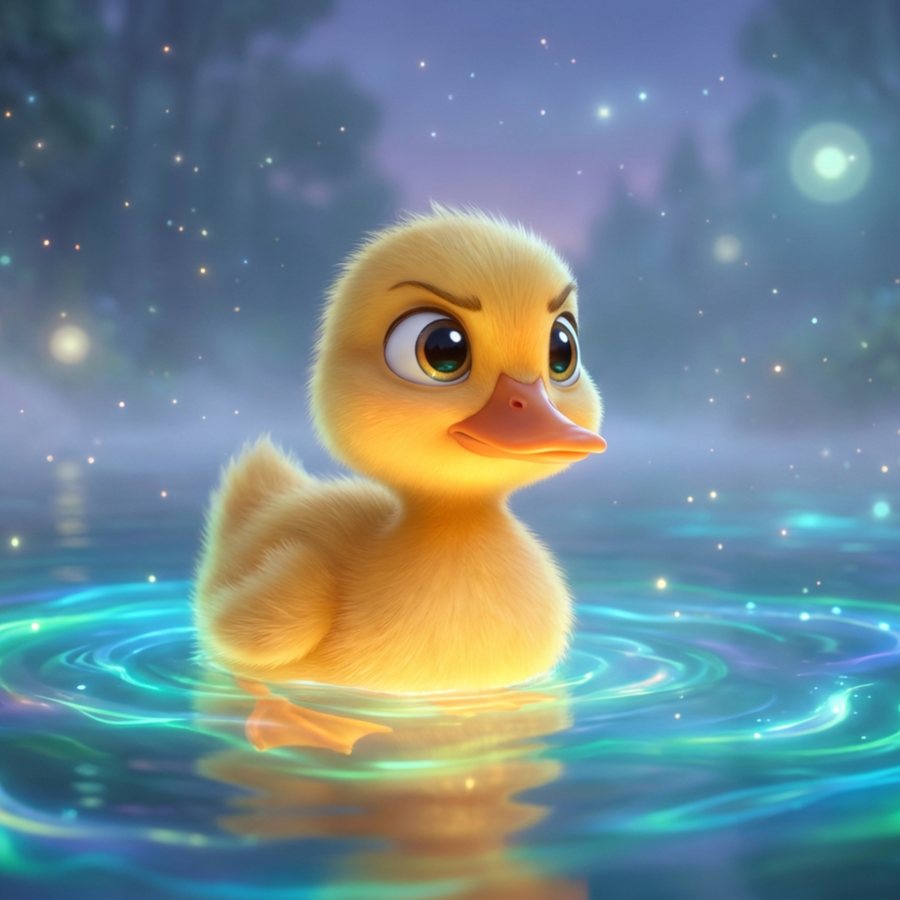
He ran outside and invented a silly new game with the ducklings.
He munched on a crunchy carrot and shouted, “Oink-oink-hooray!”
He even tried humming a happy tune instead of repeating “Not fair!” like the goat on TV.
And little by little, Pip felt lighter. His tummy didn’t groan. His head didn’t buzz. His tail curled back up in delight.
That evening, Pip flopped into bed and whispered to himself:
“What I feed my tummy matters…
and what I feed my mind matters too.”
He snorted softly, “Oink-oink-hooray,” before drifting into the happiest sleep he’d had in days.
Napoleon Hill taught that our thoughts are like food for the mind.
Too much junk—complaints, anger, endless empty shows—makes us feel cranky and stuck.
But good thoughts—hope, kindness, curiosity—give us energy, fun, and joy.
Just like Pip the Piglet, you can choose your “mental meals.”
You can switch off the shows that make you grumpy.
You can pick thoughts that lift you up.
Because what you feed your mind decides how you grow.