We're careful about what our kids eat. But a child's mind eats too — and what it's fed, especially at bedtime, shapes their dreams and days.
We’re careful about what our kids eat — the vegetables, the not-too-much-sugar, the balanced plate. But a child’s mind eats too, all day long, taking in whatever it’s fed: the scary story, the gloomy complaint, the worried scroll of images. And what a child feeds their mind — especially in the last minutes before sleep — quietly shapes their dreams and the shape of the next day. Tonight’s theme is a gentle nudge to be as thoughtful about mind-food as we are about the plate.
Why the last thoughts of the day matter most
The mind, like the body, is shaped by its diet. A child who takes in a steady stream of frightening, gloomy, or worried input all day tends to feel heavier and sleep worse — while a child fed calm, kind, and wondering thoughts settles more easily. This is especially true right before bed. The thoughts and images a child takes in in the last stretch of the day genuinely influence their mood and the quality of their sleep, because those are the thoughts the mind carries down into the dark. The final thing a child feeds their mind is, in a real sense, what their dreams are made from.
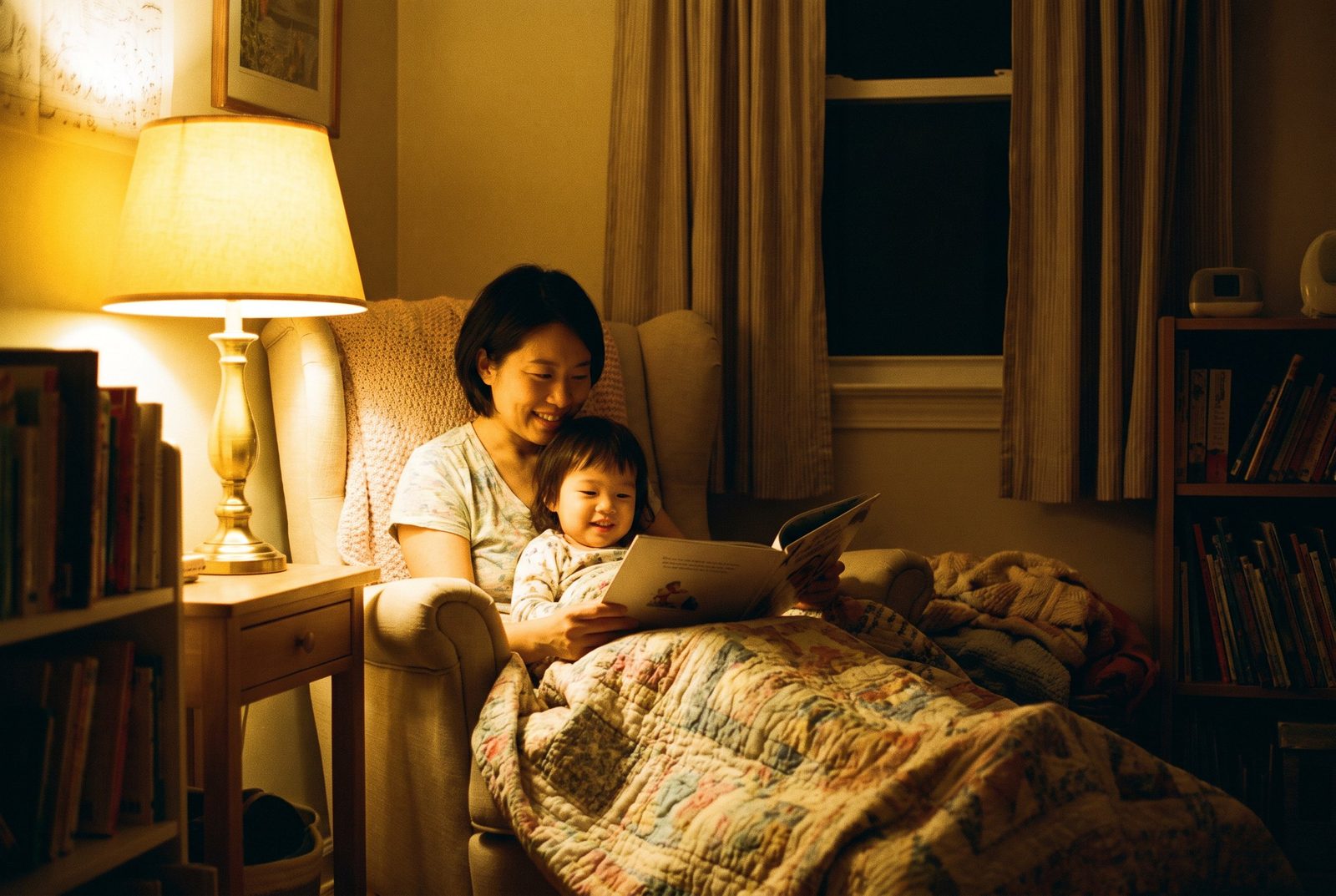
This gives parents a simple, powerful lever. You can’t control everything a child’s mind encounters during the day. But you can be intentional about the mental “last meal” — steering the final minutes toward something kind, calm, or grateful rather than scary or stimulating. A gentle bedtime “diet” — a soft story, a happy memory, one good thing about the day — supports better rest and a gentler morning. And it teaches a child, over time, to notice what they’re feeding their own mind, and to choose it with care.
The goal isn’t a child who only ever thinks pleasant thoughts — that’s neither possible nor healthy. It’s a child who learns that their mind eats everything they give it, and who chooses the bedtime meal with a little more care.
Ways to help kids feed their minds well
- Name the idea. “Your mind eats too — what did you feed it today?”
- Guard the bedtime meal. Keep the last minutes calm, kind, and screen-light.
- End with a good thing. One happy memory or grateful thought before sleep.
- Steer away from scary input at night. Save the intense stuff for daytime, if at all.
- Model your own mind-diet. “I’m choosing to think about something calm before bed.”
- Notice heavy input. “That show left you feeling anxious — let’s feed your mind something gentle now.”
- Make a soothing ritual. Story, breath, a kind word — the same gentle meal each night.
- Ask what they’re carrying to sleep. Help them set down the heavy thoughts.
- Fill the last thought on purpose. Kind words, wonder, safety — the stuff of good dreams.
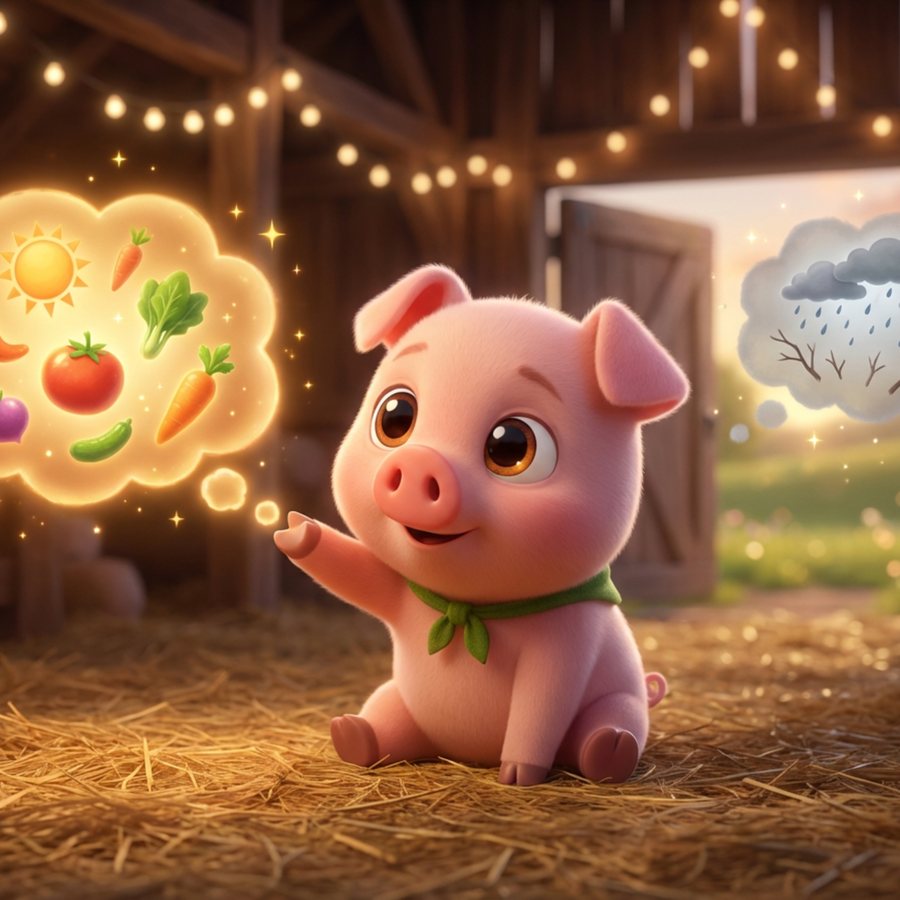
- Let a story carry it. A piglet who learns to feed his mind as carefully as his belly shows it best.
Tonight’s story is the perfect last meal
The Piglet Who Learned What to Feed His Mind follows a piglet careful about his belly but careless about his mind — until a wise old sow teaches him to feed his mind well, especially before sleep. It’s inspired by Napoleon Hill and his teaching on what we let into our minds.
Tonight’s tiny plan
- Play the story before lights-out — a gentle last meal for the mind.
- Ask: “What’s one good thing we can feed your mind before you sleep?”
- Tomorrow, notice one thing they took in, and name it as mind-food.
Your child’s mind eats everything you give it — all day, and especially at night. The gift is helping them choose the bedtime meal with care, so their dreams are made of something kind.