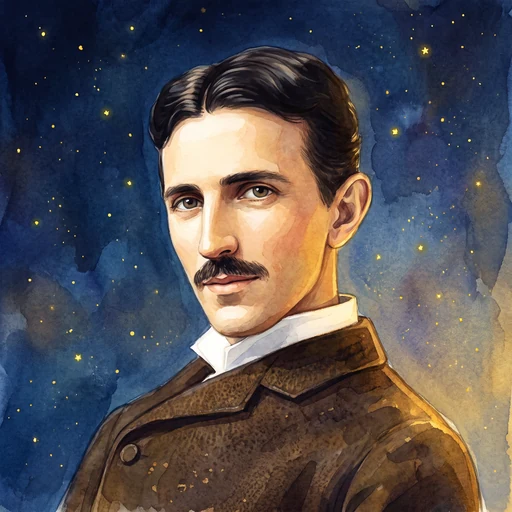
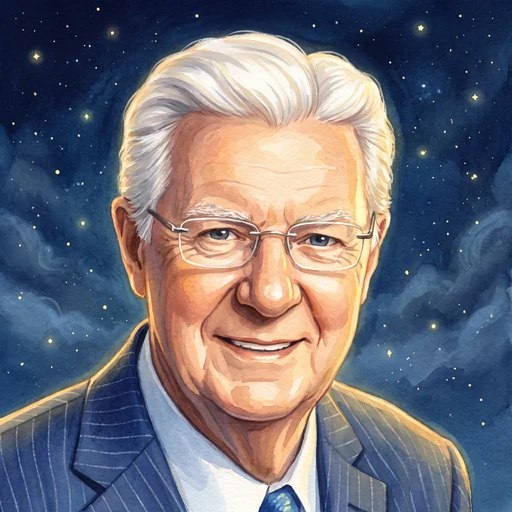
As we grow, we will face many choices. Sometimes, it’s easier to go along with what everyone else is doing. But what if we could decide for ourselves? A wise teacher named Bob Proctor taught that life isn’t just about waiting to see what happens—it’s about making choices. When we think for ourselves instead of simply following, life becomes more exciting!
Let’s step into the meadow and discover what happens when Lana learns that the best path… is the one she chooses for herself.
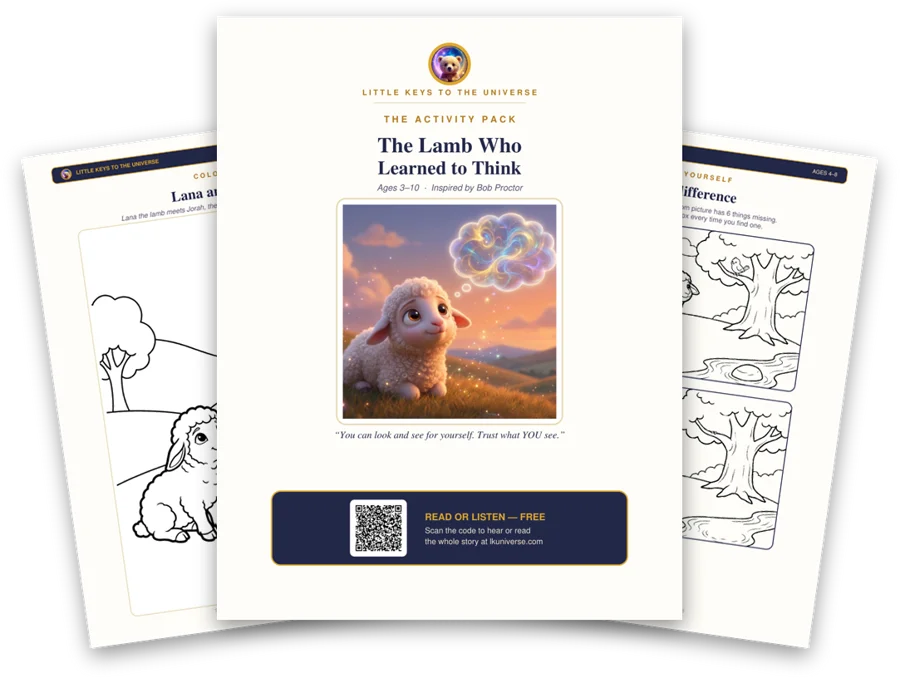
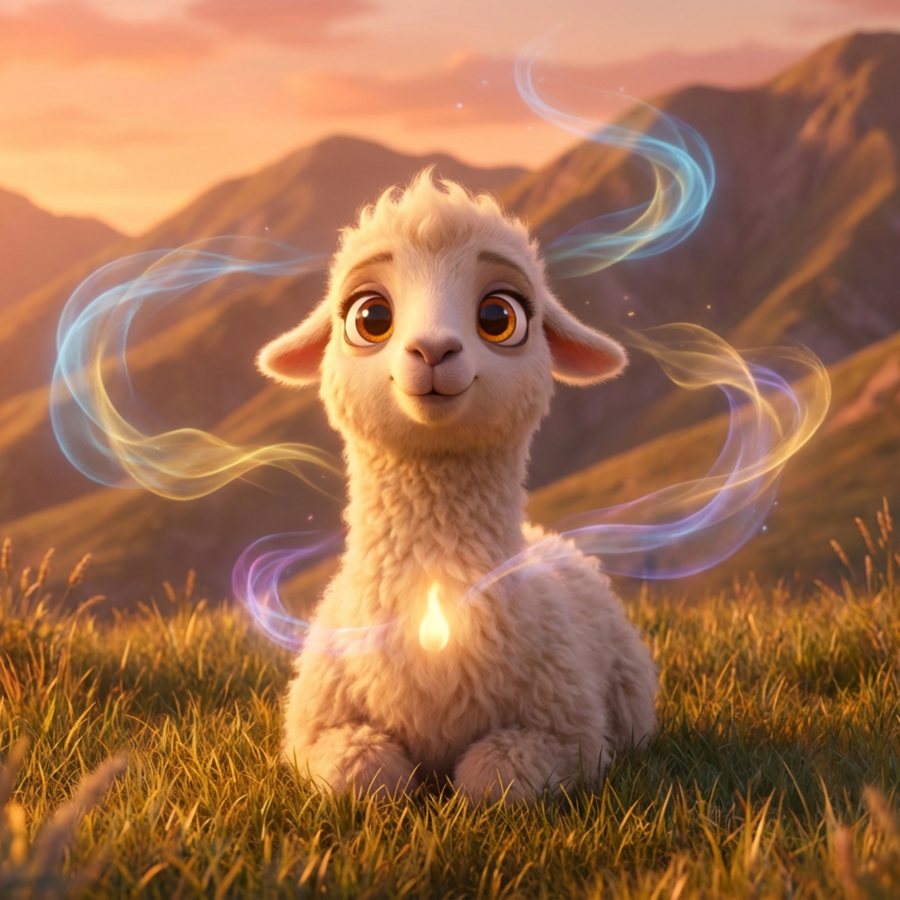
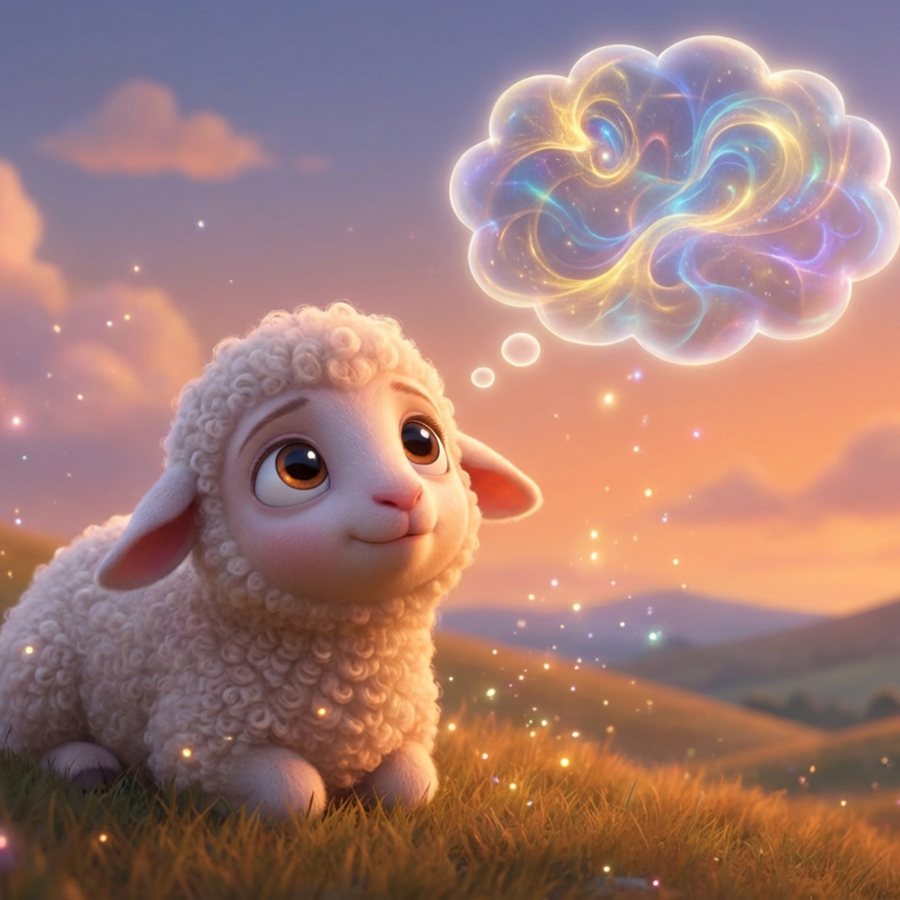
Lana was a little lamb who always stayed with the flock. When they moved, she moved. When they stopped, she stopped. She never asked, Why are we going this way? She just followed.
One morning, the shepherd led the flock across the hills, their woolly coats bouncing as they trotted along. The sun was warm, the sky was clear, and Lana felt safe in the middle of the group.
Then, the wind began to pick up. Dark clouds rolled in. A storm was coming.
Thunder rumbled through the hills, and rain poured down in heavy sheets. The flock panicked, running toward the valley for shelter.
Lana ran too, her little legs struggling to keep up. The rain blurred her vision, and as she hurried forward—she slipped!
Down, down she tumbled, rolling off the path and landing in a soft patch of grass.
When she looked up, the flock was gone.
Lana’s heart pounded. She had never been alone before.
What do I do? she thought.
She waited, hoping someone would tell her where to go. But no one came.
That’s when she heard a voice.
“You look lost.”
Lana turned and saw an old mountain goat standing on a rocky ledge above her. His horns were curved, his fur dusted with silver.
“I am lost,” Lana said. “I don’t know where to go.”
The goat smiled kindly. “I’m Jorah. You’re used to following others, aren’t you?”
Lana nodded.
“Well,” Jorah said, “following is fine, but thinking is even better.”
Lana tilted her head. “What do you mean?”
Jorah pointed toward the hills. “If you could go anywhere, where would you like to go?”
Lana hesitated. “I don’t know… I never thought about it before.”
Jorah chuckled. “That’s okay. Try thinking about what feels right to you.”
Lana looked around. The storm had passed, and the meadow was quiet again. She spotted a big oak tree in the distance, its branches wide and strong.
“That tree looks safe,” she said slowly. “I think I’d like to go there.”
Jorah nodded. “Good choice. Now, go see if you were right.”
Lana’s legs trembled as she took her first step. She wasn’t used to choosing on her own. But as she walked, she felt something new—a tiny spark of confidence.
She climbed over a small hill, watching where she stepped. She listened to the sounds of the meadow—the rustling grass, the distant stream, the birds calling in the trees.
For the first time, she wasn’t just moving—she was thinking.
When she reached the big oak tree, she curled up beneath its branches. The shade was cool, the ground was soft, and she felt safe.
And then, she heard something familiar.
In the distance, she saw her flock!
She had done it. She had found her own way.
As she rejoined the others, she felt different. She knew that listening to her family was important, but now she also knew she could think and make choices too.
And so, Lana didn’t stop listening to others—she simply learned that she had a voice of her own, too.
Bob Proctor taught that if we only copy what others do, we never learn what we really want. But if we practice making small choices, we get better at choosing what’s best for us.
Tonight, before you close your eyes, try this:
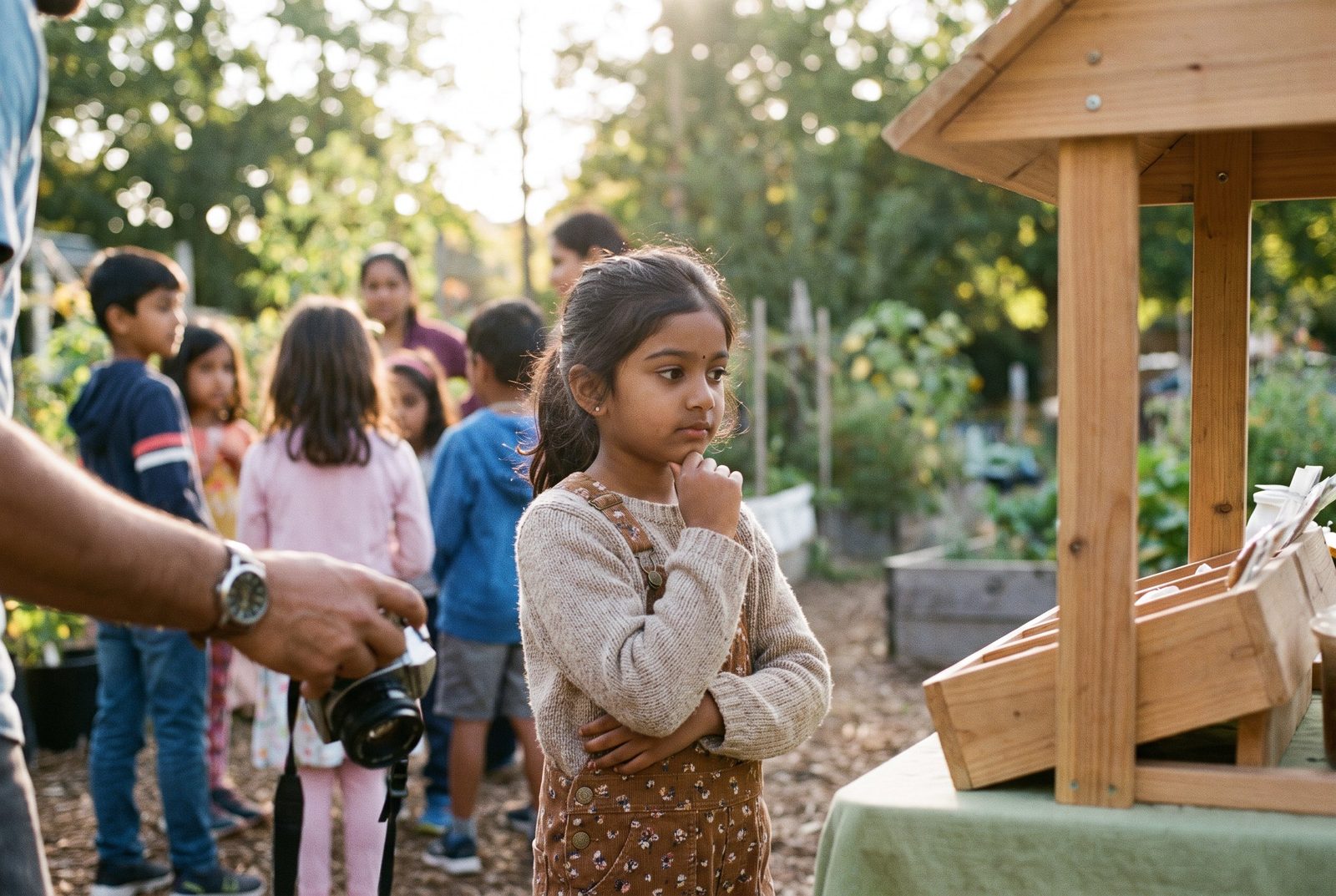
Think of something small you can decide for yourself—maybe a book to read, a snack to eat, or a game to play.
If a friend says, “Let’s do this!” take a moment to ask yourself, “Do I really want to?”
When someone gives you advice, think about why they are saying it.
Because listening is important—but so is thinking for yourself.
And the more you practice making small choices, the better you’ll get at making big ones when you grow up.
So, what’s one small choice you can make tomorrow?