
The river flowed gently through the heart of the forest, sparkling under the golden light of the sun. It was the lifeblood of the forest—its water nourished the plants, cooled the animals, and brought peace to the land. The animals had lived with the river for generations, understanding its importance. But lately, something had changed.
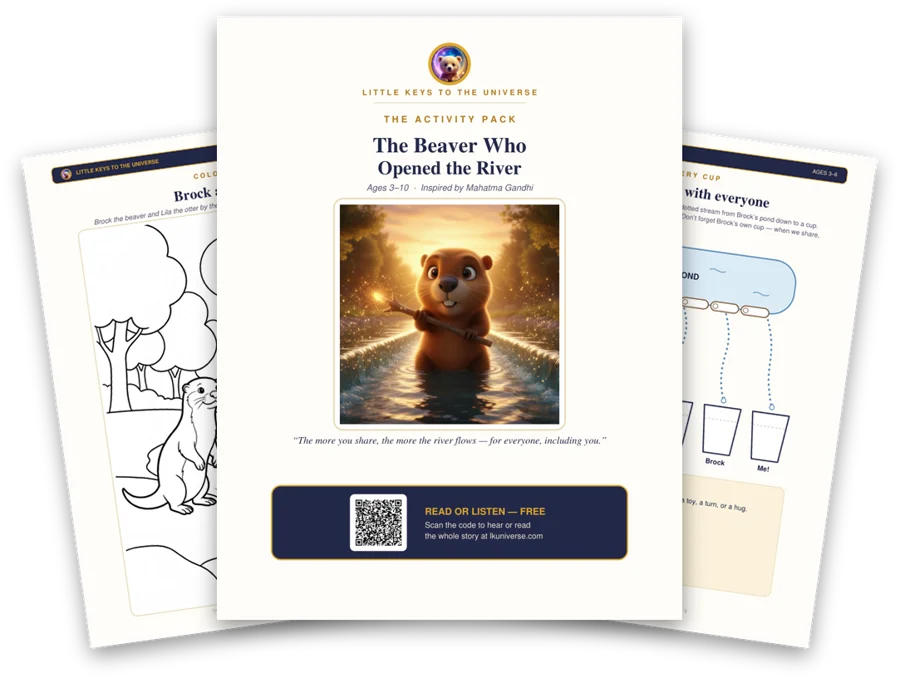
At the edge of the river stood a beaver named Brock. Brock was known for his hard work, but he had become rather selfish lately. He worked tirelessly to build his dam, taking as much water as he could, hoarding it for himself. He grumbled to himself as he chopped trees and blocked the river.
“Why should I share?” Brock muttered under his breath. “I’ve worked hard for everything I have. The others can take care of themselves.”
But the more Brock took, the slower the river seemed to flow. The water became murky, and soon the other animals noticed the change. The once-clear river now seemed sluggish, and the animals began to struggle to get what they needed.
One day, a kind-hearted otter named Lila approached Brock. Lila was known for her generosity. She always shared what she had with the other animals, knowing that the river would flow better when everyone worked together.
“Brock,” Lila said, her voice gentle, “the river is slowing down. We all need to share it, or it won’t flow as it should. The more we give, the more it gives back to us.”
Brock glared at her, not wanting to hear it. “What do you mean, share?” he snapped. “I’ve built this dam myself, and I need this water. I’ve worked harder than anyone. Why should I give anything away?”
Lila remained calm. “Because, Brock, the river works best when we all share. It’s the law of giving and receiving. The more you give, the more the river flows for everyone.”
Brock huffed, flicking his tail in frustration. “I don’t believe in that. I’m not giving away what I’ve worked so hard to get. The others can figure it out themselves.”
Lila sighed but didn’t give up. “Alright, Brock, I understand you’re upset. But I want you to watch the river for a while. See how it’s changing. The more we give, the more the river can flow, for everyone.”
Brock reluctantly agreed to stay by the riverbank, though he didn’t think it would make a difference. He sat with his paws crossed, grumbling as he watched the murky water. Lila took a deep breath and waded into the river, inviting the other animals—rabbits, squirrels, and birds—to drink and share in the water.
After a while, Brock couldn’t help but notice something strange. As the animals drank and played together, the water seemed to clear, and the river began to flow more freely. He blinked in surprise as the once sluggish current started to move faster.
“What’s happening?” Brock asked, unable to contain his curiosity.
Lila smiled. “It’s the river responding to the law of giving and receiving. As we share, the water flows more abundantly. It’s like a cycle—what we give comes back to us, and the river becomes stronger.”
Brock stared at the now-clear water. He could see how the animals were all thriving together, playing and sharing, while the river flowed with life. He had to admit—there was something to what Lila was saying.
“Maybe... maybe I’ve been wrong,” Brock muttered under his breath, still a bit grumpy but intrigued. “I don’t want to lose everything, though. If I start sharing, will I have enough for myself?”
Lila nodded. “When we share, the river shares with us, too. Trust me, Brock. You don’t have to take everything for yourself. The more you give, the more you will have.”
Brock still wasn’t convinced, but he decided to give it a try. Slowly, he started to share some of the water he had hoarded, offering it to the other animals. To his surprise, the more he gave, the more the river seemed to flow, and the more at peace he felt.
As he shared, Brock noticed something else—he didn’t feel like he was losing anything. In fact, he felt better than he had in a long time. The water was flowing stronger than ever, and everyone, including himself, had enough.
“Wow, I can’t believe it,” Brock said, finally understanding. “I thought I’d lose everything by giving, but instead, I have more than I ever expected.”
Lila smiled. “That’s the power of generosity, Brock. The law of giving and receiving is about balance. The more we share, the more we receive. It’s a flow that benefits everyone.”
From that day on, Brock shared freely with the other animals. He learned that generosity wasn’t just about giving—it was about creating a balance that worked for everyone. And as the river flowed abundantly, so did the forest around it.
“And so, Brock discovered the true power of giving and receiving. By sharing with others, the river flowed freely, and everyone benefited. He learned that when we give, we also receive, and the balance of life is restored.”