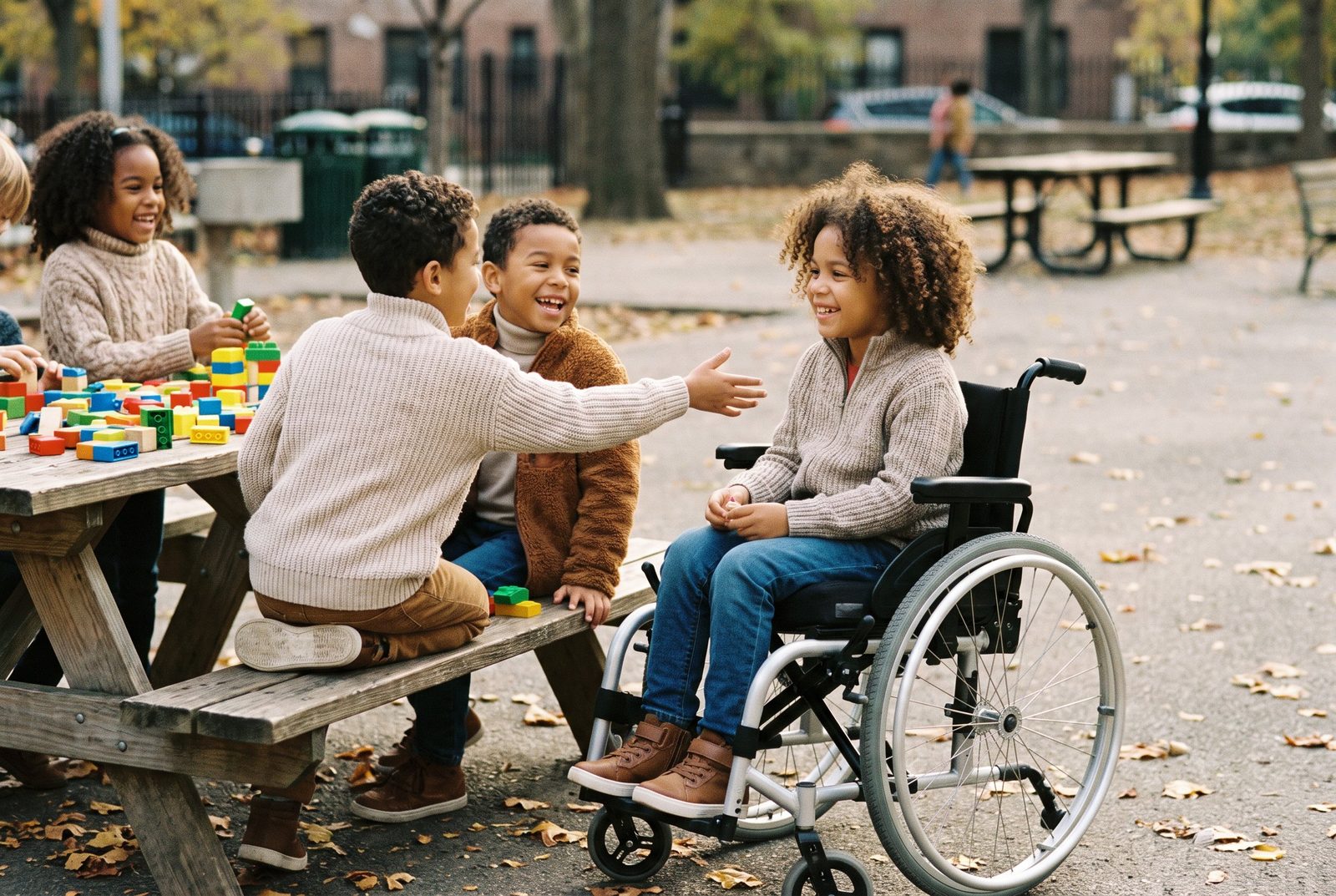
Sometimes a child is sure everyone else is ahead and they're all alone. Here's how to help — and why they're more supported than they can see.
Sometimes a child looks around and concludes that everyone else is growing, thriving, moving ahead — and they’re the one left behind, too far out at the edge, too different, quietly forgotten. It’s a lonely place to be, and telling them it isn’t true rarely helps. What helps is something quieter: the discovery that they’ve been held and supported all along, in ways they simply couldn’t see.
Why “you’re not alone” needs to be shown, not said
Feeling left behind is one of the more painful experiences of childhood, and it tends to arrive right when peer belonging becomes central — roughly the early school years, when a child starts measuring themselves against the group and can decide, privately, that they don’t measure up. A parent’s instinct is to reassure: “You’re doing great! Everyone loves you!” But reassurance often bounces off, because the feeling isn’t logical — it’s a felt sense of being on the outside.
What actually shifts it is helping a child feel the support that’s already there but invisible to them. Much of what holds a child up happens underground, out of sight — the steady care of a family, a teacher who’s rooting for them, the quiet ways they’re being fed and supported without noticing. A child who feels alone is often deeply connected; they just can’t see the roots reaching toward them. And connection is protective in a real way: even one strong relationship dramatically improves how a child weathers feeling different or left out. The goal isn’t to convince them they’re not different. It’s to help them feel that different was never the same as alone.
Ways to help a child who feels left behind
- Don’t rush to fix the feeling. “That sounds really lonely” lands better than “but everyone likes you!”
- Make the invisible support visible. “So many people are quietly cheering you on.”
- Reassure that different isn’t behind. Everyone grows on their own timeline.
- Name their specific place. “This family isn’t the same without you in it.”
- Point to one strong connection. A single steady relationship steadies everything.
- Notice them being them. Attention says “you’re seen” more than praise does.
- Widen the circle. A club, a team, a cousin — more roots reaching toward them.
- Model that being on the edge is okay. Different can be its own kind of strength.
- Keep showing up. Your steady presence is the support, felt over time.
- Let a story carry it. A little tree who feels the whole forest reaching for her underground shows it best.
Tonight’s story shows the roots reaching
The Tree That Wouldn’t Grow follows a young tree at the forest’s edge, certain she’s alone and forgotten — until she feels the whole forest quietly sharing water with her, root to root, all along. It’s inspired by the Dalai Lama and his teaching on our deep interconnection.
Tonight’s tiny plan
- Play the story before lights-out.
- Remind them, gently: “Even when you feel alone, there are roots reaching for you.”
- Tomorrow, make one bit of the invisible support visible — a note, a word, a small “I saw you.”
Your child will feel left out sometimes — it’s part of growing up. The gift is helping them feel that they were never as alone as it seemed. The roots were reaching for them the whole time.