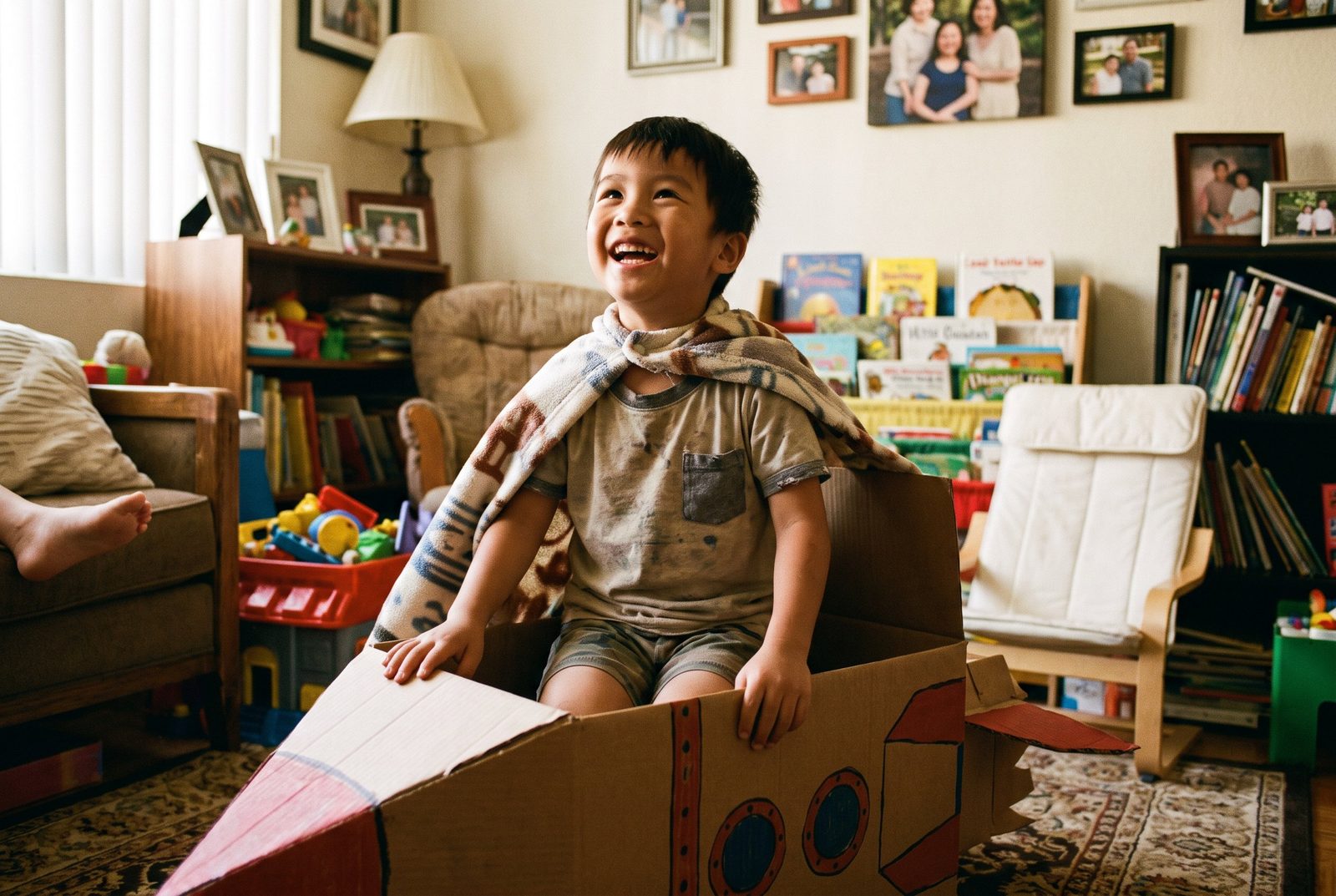
Imagining something clearly isn't idle daydreaming — it's often the first real step toward doing it. Here's how to help kids use it.
Kids are natural dreamers. They picture themselves as astronauts, superheroes, big-kids who can finally reach the high shelf. Adults often smile and call it cute — or worse, tell them to stop daydreaming and focus. But there’s real power in a child’s imagination, and helping them use it well is more useful than we tend to think.
Why imagining is a first step, not a distraction
There’s a reason athletes rehearse a move in their minds before they do it: vividly picturing an action lights up many of the same pathways as physically practicing it. Imagination isn’t the opposite of doing — for kids, it’s often the runway. A child who can picture themselves handling the first day of school, making the friend, climbing the wall, has already begun the work of doing it. The mental picture makes the real thing feel a little more possible.
This is different from empty wishing. The useful kind of imagining is specific and felt — not “I hope I do well” but a detailed, sensory picture: what it looks like, sounds like, feels like to actually do the thing. And it grows with practice. A child who regularly imagines what they want to become, in detail, is quietly building both the belief and the map to get there.
None of this means every daydream becomes reality. But dismissing imagination as a waste misses what it really is at this age: one of the most powerful tools a child has for growing into who they want to be.
Ways to help a child use imagination well
- Take their dreams seriously. “Tell me more about that” beats “that’s just pretend.”
- Ask for details. “What does it look like? What do you hear?” turns a vague wish into a vivid picture.
- Have them imagine the hard thing going well. Before a nervous moment, picture it together, calmly, in detail.
- Separate imagining from wishing. “Picture yourself actually doing it” is more powerful than “hope it happens.”
- Protect pretend play. Unstructured imaginative play is where this muscle grows.
- Model it. “I’m picturing how I want tomorrow’s meeting to go” shows imagination as a tool.
- Bridge picture to practice. “You imagined it — now let’s try one small real step.”
- Don’t mock the big dreams. Today’s impossible dream is often tomorrow’s motivation.
- Use bedtime for good pictures. The last thing imagined before sleep tends to linger.
- Let a story show it. A character who imagines his leap before he makes it teaches it best.
Tonight’s story shows imagination at work
The Frog Who Dreamed His Life follows a small frog who imagines his great leap in vivid detail every night — and slowly becomes the frog who can actually make it. It’s inspired by Neville Goddard and his teaching on the power of imagination.
Tonight’s tiny plan
- Play the story before lights-out.
- Ask: “What’s something you’d love to do someday? Let’s imagine it — all the details.”
- Tomorrow, help them take one small real step toward the picture.
Your child’s imagination isn’t a distraction from real life. Handled well, it’s one of the first places their real life gets built.