Kids who rush through everything miss the moment they're in. Here's how to help a child slow down and actually notice their own life.
Some kids move through the day at a sprint — hurrying through breakfast to get to play, rushing through play to get to the next thing, always leaning toward what’s coming instead of resting in what’s here. It looks like energy, and often it is. But a child who’s always racing toward next can miss the small, good moments happening right in front of them. Learning to slow down — even for one breath — is how they find those moments again.
Why “slow down” is a skill, not a scolding
“Slow down” is one of the most-said and least-effective phrases in parenting, because rushing usually isn’t a behavior problem — it’s a wiring one. Young children live in the now by nature, but they also chase novelty hard, and in a fast household with a busy schedule, that natural pull toward the next thing gets amplified. Telling a racing child to slow down is like telling water to stop being wet.
What works better is giving them a taste of what slowing down feels like — one moment of genuine presence, so they learn it’s not boring, it’s rich. When a child actually stops and notices — the taste of the food, the feel of the grass, the face of the person talking to them — they often light up, because they’ve been skating past all of it. Presence isn’t a rule to enforce. It’s an experience to offer, and once a child has felt it, they can find their way back to it.
The aim isn’t a slow child. It’s a child who can choose to slow down when it matters — at a meal, in a hug, on a walk — instead of always being carried along by the rush.
10 ways to help a child slow down
- Model one slow moment yourself. Put the phone down and actually notice something out loud.
- Do “one slow thing” together. One slow bite, one slow breath, one slow look — tiny is fine.
- Ask what they noticed, not what they did. “What did the ice cream taste like?” pulls them into the moment.
- Protect unstructured, unhurried time. Presence needs space the schedule doesn’t fill.
- Narrate the present. “Right now, the sun is warm and the birds are loud” teaches noticing by example.
- Don’t over-schedule. A child racing between activities never learns to rest in one.
- Use transitions gently. A rushed child at every changeover stays in sprint mode all day.
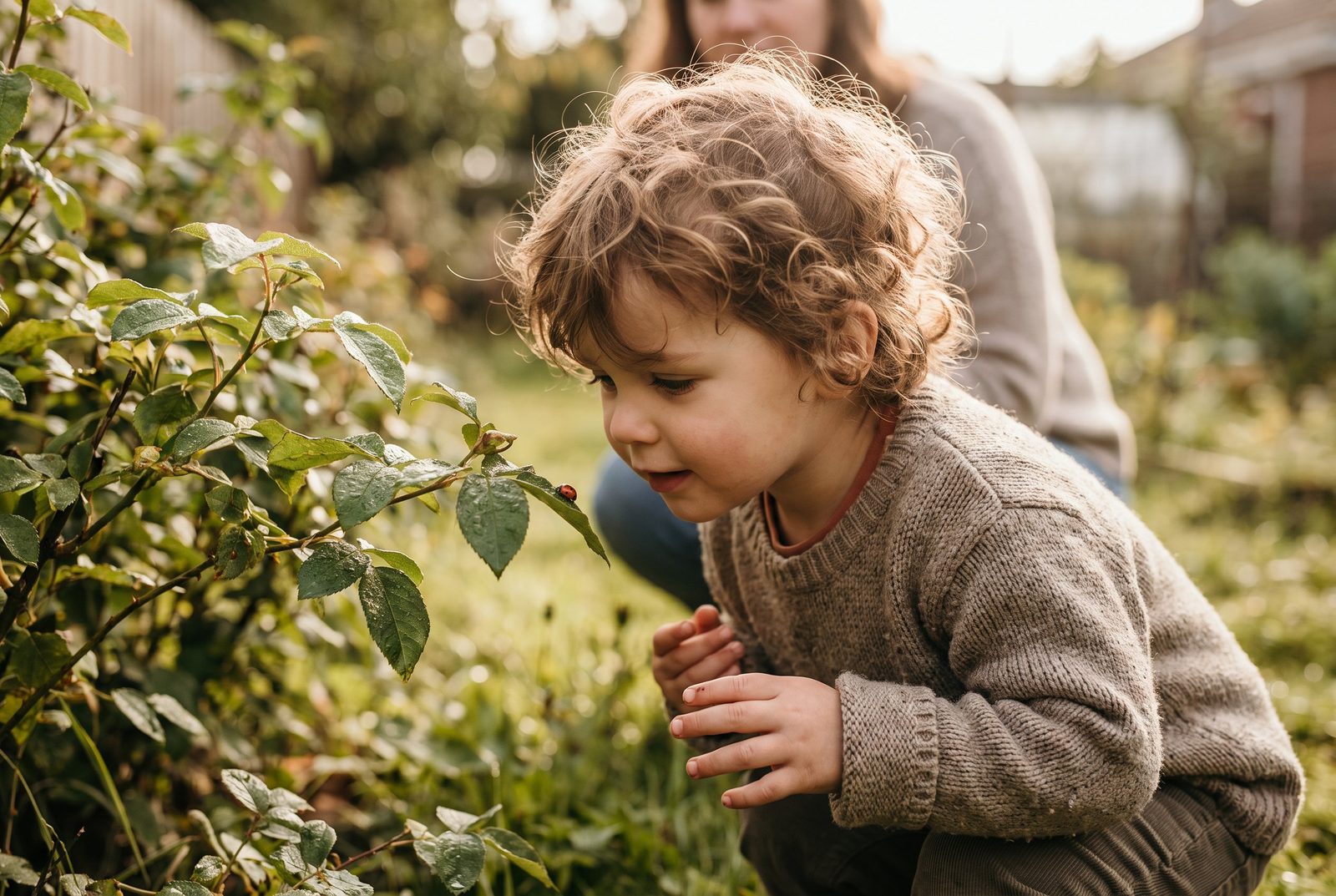
- Catch the good of slowing. “You really looked at that bug — did you see its colors?”
- Make bedtime the slow anchor. One unhurried, present moment to end each day.
- Let a story model it. A character who slows down and discovers what she was missing teaches it best.
Tonight’s story shows what slowing down reveals
The Rabbit Who Learned to Slow Down follows a rabbit who’s always racing toward the next thing — until one slow hop shows her everything she’d been blurring past. It’s inspired by Eckhart Tolle and his teaching on the power of being present.
For the daytime half, 10 Ways to Find Joy offers ten more small, present-moment moves.
Tonight’s tiny plan
- Play the story before lights-out.
- Take one slow breath together and notice one thing in the room.
- Tomorrow, try one “slow thing” — a bite, a look, a hug — on purpose.
Your child’s life is happening right now, at whatever speed they’re moving. The gift of slowing down, even briefly, is that they get to actually be there for it.