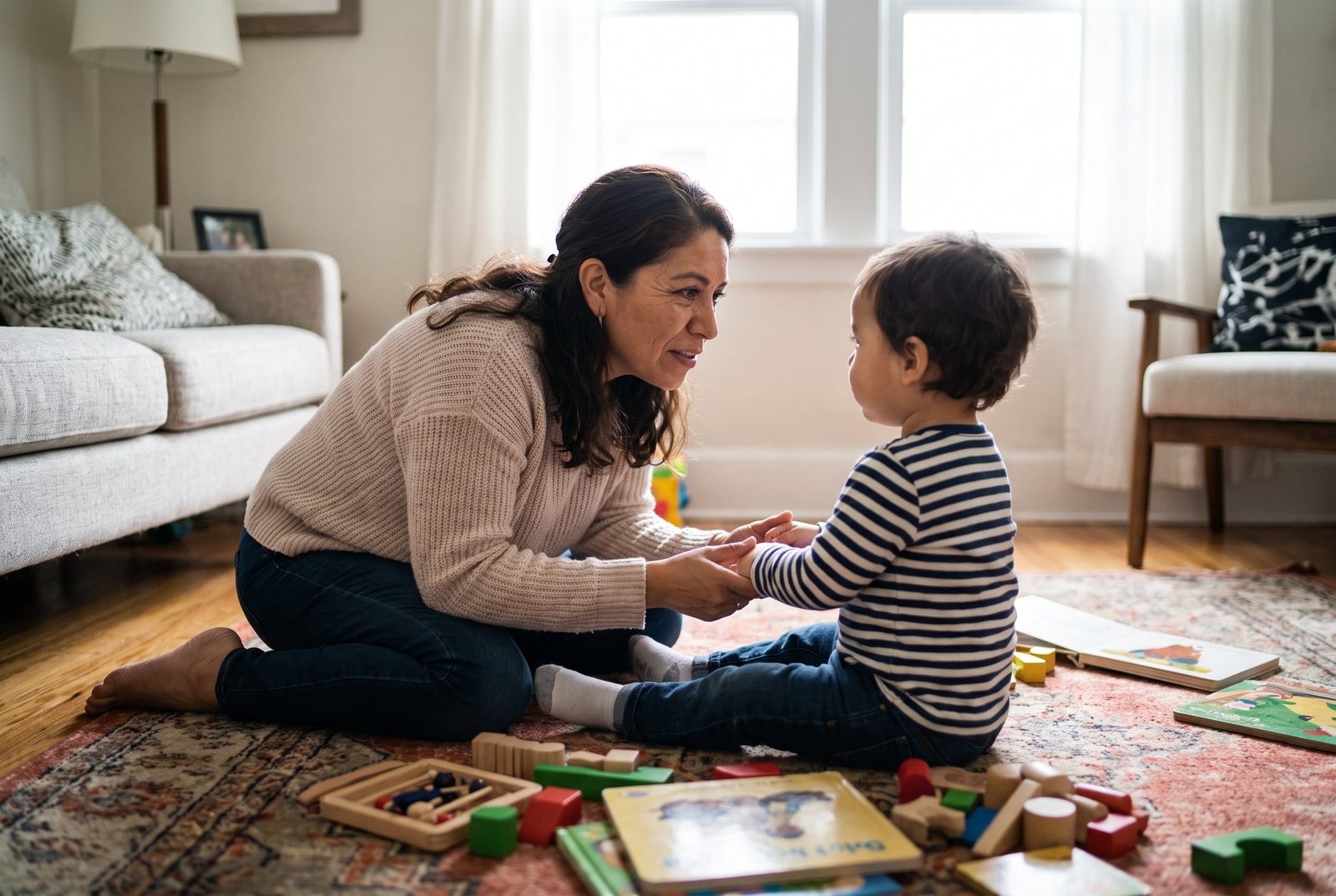
Big feelings are scary for a child who can't name them. Here's the first tool of emotional intelligence — and it's simpler than you'd think.
A big feeling can be genuinely frightening for a young child — not because the feeling itself is dangerous, but because it arrives with no name. The anger, the sadness, the overwhelm just happen to them, out of nowhere, like a storm with no explanation. One of the most useful ideas in emotional intelligence — often summed up as “name it to tame it,” a phrase coined by psychiatrist Dr. Dan Siegel — turns out to be surprisingly simple: give the feeling a name, and it stops being a monster and becomes a messenger.
Why naming a feeling calms it
When a child is swept up in a big emotion they can’t identify, the not-knowing is often the scariest part. It feels like the feeling is in charge. But something remarkable happens the moment they can name it: labeling an emotion measurably calms the brain’s stress response. Putting the feeling into a word — “that’s anger,” “that’s disappointment” — moves it from an overwhelming force to a piece of information the child can actually work with. Psychologist Marc Brackett, whose research centers on “permission to feel,” frames emotions this way: not as problems to suppress, but as messengers carrying useful data.
That reframe changes everything for a child. Anger stops being a storm that takes over and becomes a message: something feels unfair. Sadness becomes: I lost something I care about. Once a child can name the color of the feeling, they can hear what it’s trying to tell them — and respond, instead of just being swept away. This is why building a child’s emotional vocabulary early matters so much: it’s the foundation of lifelong self-regulation. And it grows fastest in the early years, one named feeling at a time.
The goal isn’t a child who never has big feelings. It’s a child who can name them — and who therefore isn’t at their mercy.
10 ways to build emotional vocabulary
- Name feelings out loud, often. “You seem frustrated” hands them the word.
- Name your own. “I’m feeling overwhelmed, so I’m going to take a breath.”
- Treat feelings as messengers. “Anger is telling you something feels unfair — let’s listen.”
- Never call a feeling bad. The feeling is welcome; only some behaviors need limits.
- Expand beyond mad/sad/happy. Frustrated, nervous, disappointed, jealous — more words, more control.
- Notice the feeling under the behavior. “You’re not being difficult — you’re overwhelmed.”
- Use a feelings chart or faces. Little kids grasp emotions they can see.
- Wait out the storm, then name it. Naming works best once the peak passes.
- Praise the naming. “You told me you were angry instead of hitting — that’s huge.”
- Let a story carry it. A chameleon who learns the names of his colors shows it best.
Tonight’s story names the feelings
The Chameleon Who Learned to Feel follows a chameleon terrified by the colors that wash over him — until a wise iguana gives them names, and they turn from storms into messengers. It’s inspired by Dr. Marc Brackett and his “permission to feel” research.
For the daytime half, 10 Ways to Talk About Sadness offers ten more feeling-friendly moves.
Tonight’s tiny plan
- Play the story before lights-out.
- Ask: “What color was your biggest feeling today? What do you think it was telling you?”
- Tomorrow, name one feeling out loud before it becomes a storm.
Your child’s big feelings aren’t monsters to fear — they’re messengers. And the moment your child can name them is the moment they can finally hear the message.