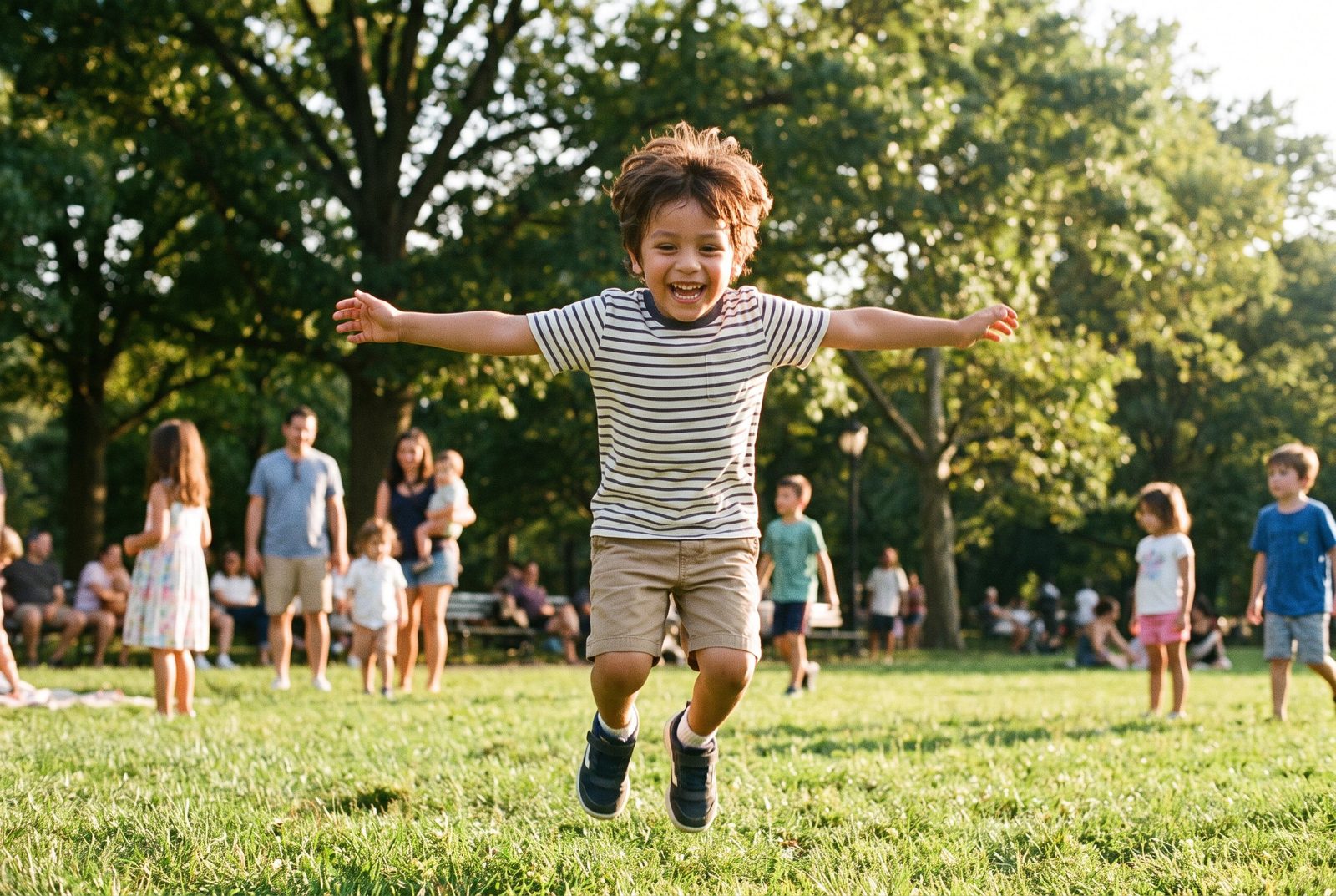
Some kids are all big love and big energy — and can't understand why others flinch. Here's how to teach the magic of pausing to check in first.
Some children are pure, exuberant, full-body love — and they can’t understand why the other kids flinch, or scatter, or cry when they come barreling over to play. They only wanted to hug, to join in, to have fun. But their bigness — the enthusiastic tackle-hug, the booming voice, the rushing in — lands harder than they realize. Teaching these big-hearted kids to move gently isn’t about loving less. It’s about learning to check in first.
Why big love needs a pause
A big-energy child usually isn’t trying to overwhelm anyone; they’re offering their whole self at full volume, and they genuinely don’t perceive the impact. The tackle-hug feels like love to them, so it’s baffling when it makes a smaller child cry. What’s missing isn’t kindness — it’s attunement, the skill of tuning in to what the other person actually needs before acting, rather than assuming everyone wants what you want. Physician Gabor Maté describes attunement as central to caring relationships: sensing and meeting the other person where they are.
For a big-energy child, this comes down to a small, learnable habit: pause before rushing in. Look — is this kid big like me, or little? Listen — do they seem open, or nervous? And ask — “do you want a big hug, or a gentle high-five?” That pause is where a young child learns to read a flinch, a step back, a “not so hard,” and adjust. It also quietly teaches consent: that we check what someone wants before we give it. None of it dims their enormous love. It just teaches them to offer it in a size the other person can receive.
The goal isn’t a calmer, smaller child. It’s a big-hearted one who learns that pausing to check in is what finally lets others run toward them instead of away.
Ways to help a child move with care
- Teach the pause. “Before you rush in — stop, look, and ask.”
- Give them the question. “Do you want a big hug or a gentle high-five?” teaches consent and care at once.
- Name the impact gently. “Your hug is strong — some friends need a softer one.”
- Don’t shame the energy. The love is wonderful; only the delivery needs tuning.
- Read cues together. “Did you see them step back? That means ‘a little gentler.’”
- Model checking in. Ask them “do you want a hug right now?” so they feel it.
- Practice gentle. Make “soft paws” a game before it’s a correction.
- Catch the attunement. “You asked first and they said yes — that’s how you did it.”
- Match energy to the room. Help them notice when big is welcome and when it isn’t.
- Let a story carry it. A big bear who learns to pause, look, and ask shows it best.
Tonight’s story teaches the pause
The Bear Who Learned to Move with Care follows a big-hearted bear who can’t understand why the small animals scatter — until he learns to pause, look, and ask before he bounds in, and the meadow starts running toward him. It’s inspired by Dr. Gabor Maté and his work on attunement.
Tonight’s tiny plan
- Play the story before lights-out.
- Practice the question together: “Would you like a big hug, or a gentle paw?”
- Tomorrow, model pausing to check in before a hug or a rush of play.
Your big-energy child’s love is a gift — never the problem. The gift you can add is teaching them to pause, look, and ask, so that everyone gets to enjoy how much they have to give.